
Arrest Warrants in Lee County
A Lee County arrest warrant is the court order that lets officers take a named person into custody and bring that person before a judge. The process starts with an incident or offense report. For many misdemeanors outside city limits, the complainant also files a deposition. Someone swears to the facts under oath. The magistrate then weighs the sworn statement and issues the warrant only when probable cause exists. Lee County magistrates handle county felonies, county traffic, out-of-city misdemeanors, and worthless-check cases. Auburn and Opelika keep misdemeanors inside their police jurisdictions in municipal court. After arrest comes booking, an initial appearance, and a release or bond decision. Every step runs through the court that issued the warrant.
Lee County Arrest-Warrant Sequence
The official Lee County magistrate page lays out the sequence and the county-versus-city line. It confirms one safeguard: a warrant issues only when a magistrate finds probable cause. The page shows which venue handles your case.
- An incident or offense is reported to the sheriff or police agency with jurisdiction.
- An investigator or complainant supplies the report and, when required, a sworn deposition.
- The magistrate places the affiant under oath and independently reviews the facts.
- If probable cause exists, the warrant issues for service by an authorized agency.
- After arrest, the court addresses rights, the charge, future settings, and release conditions.
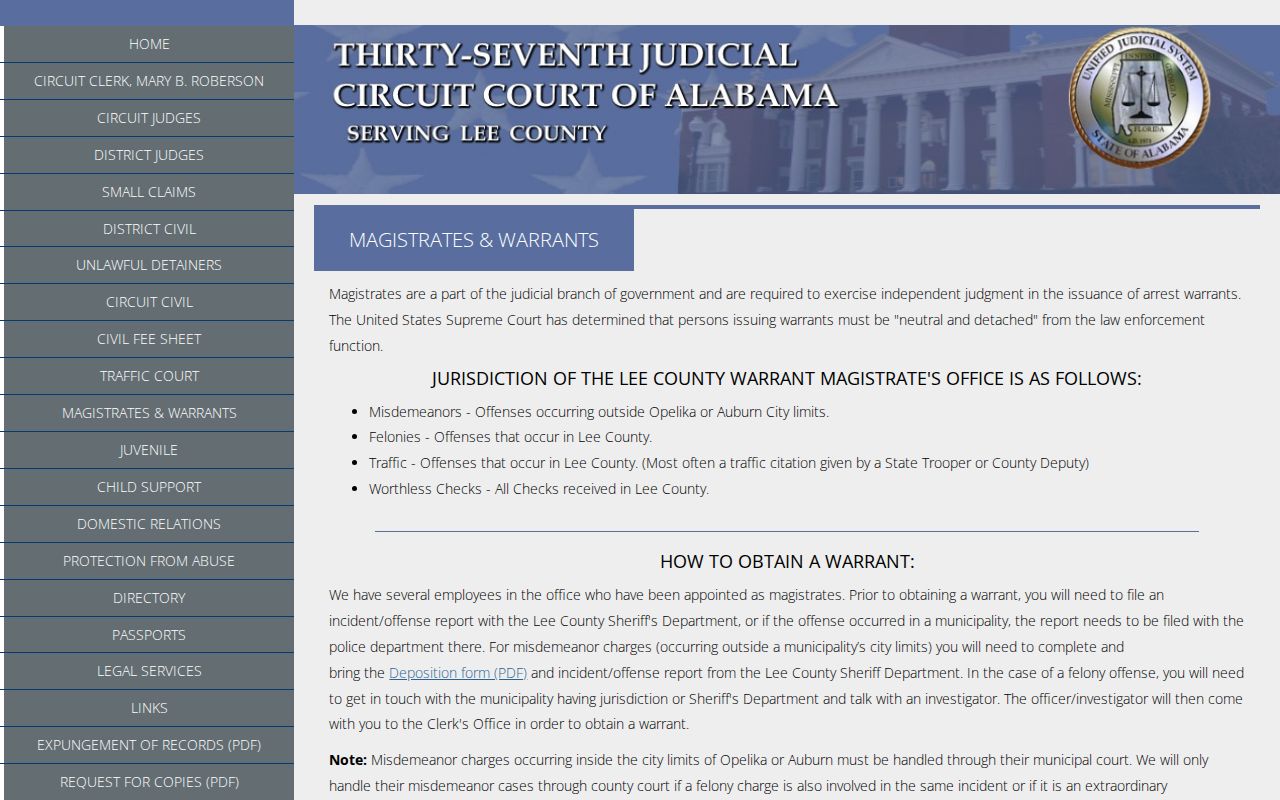
What the county publishes here is its own process, not a commercial lookup or any roster of names.
What a Lee County Arrest Warrant Contains
Alabama's official forms and local practice set the anatomy of a Lee County warrant. It names the court and county. It identifies the subject, the complaint or deposition behind it, the alleged offense, and the issuing magistrate, and it commands an arrest. Service and return details and bond conditions get added as the case moves. No public format exists for warrant numbers. No fixed bond amount appears either. Those specifics come from the issuing court. The Alabama Judicial System criminal-forms index lists the complaint, deposition, arrest-warrant, alias failure-to-appear, bond, and surrender forms.
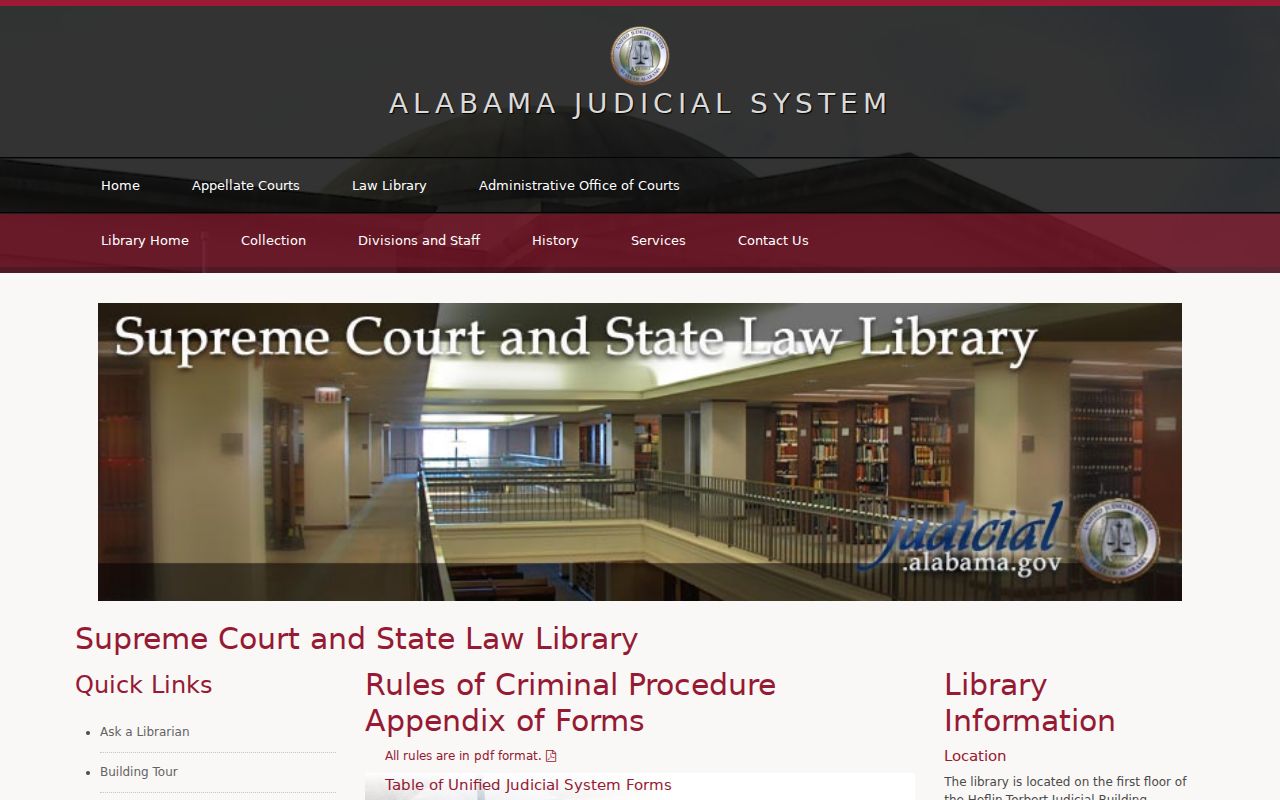
The forms listed cover every process type the state publishes, without exposing anyone's Lee County arrest-warrant record.
| Case Reference | COURT FILE or cause identifier |
|---|---|
| Named Subject | Name and protected identifiers |
| Sworn Basis | Complaint, report, or deposition |
| Authorization | Issuing court, magistrate, and date |
| Service Return | Serving agency and execution status |
| Release Terms | Bond type or conditions if set |
Each date on the file marks a different event. Offense date, warrant date, arrest date, and docket update date are not interchangeable. Juvenile, youthful-offender, grand-jury, sealed, open-investigation, and protected identifying material can stay restricted in Lee County even after service.
City and County Arrest-Warrant Routes
Auburn Police works Auburn cases. Opelika Police works Opelika. The Lee County Sheriff's Office serves county process and runs the detention system. The two are not always the same office. Someone arrested on a municipal warrant may sit in the county detention center while the city court keeps authority over the case. Opelika's official victim-resources page walks through the city complaint, magistrate, warrant, arrest, bond, and initial-appearance path.
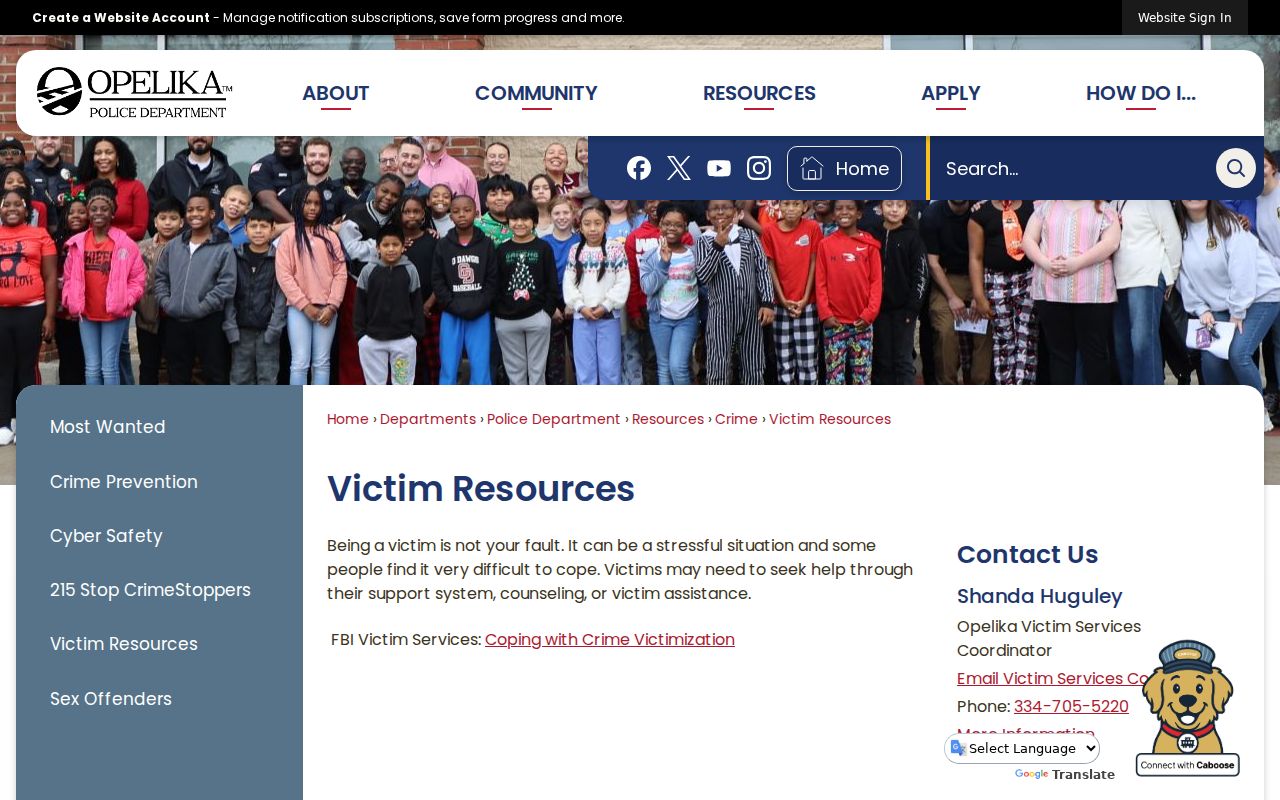
After an arrest, the city sequence links to county detention. The case itself stays with the Lee County court that authorized the warrant.
How Lee County Arrest Warrants Are Served
The Lee County Sheriff's Office, Auburn Police, Opelika Police, or another authorized agency can execute a Lee County arrest warrant. A city warrant can be served outside city limits. The place of arrest does not reveal the venue. Federal or cross-jurisdiction cases may bring in the U.S. Marshals Service or the Gulf Coast Regional Fugitive Task Force. Those partnerships do not create a public search. The PACER federal docket service opens federal case records. It is not a Lee County arrest-warrant list.
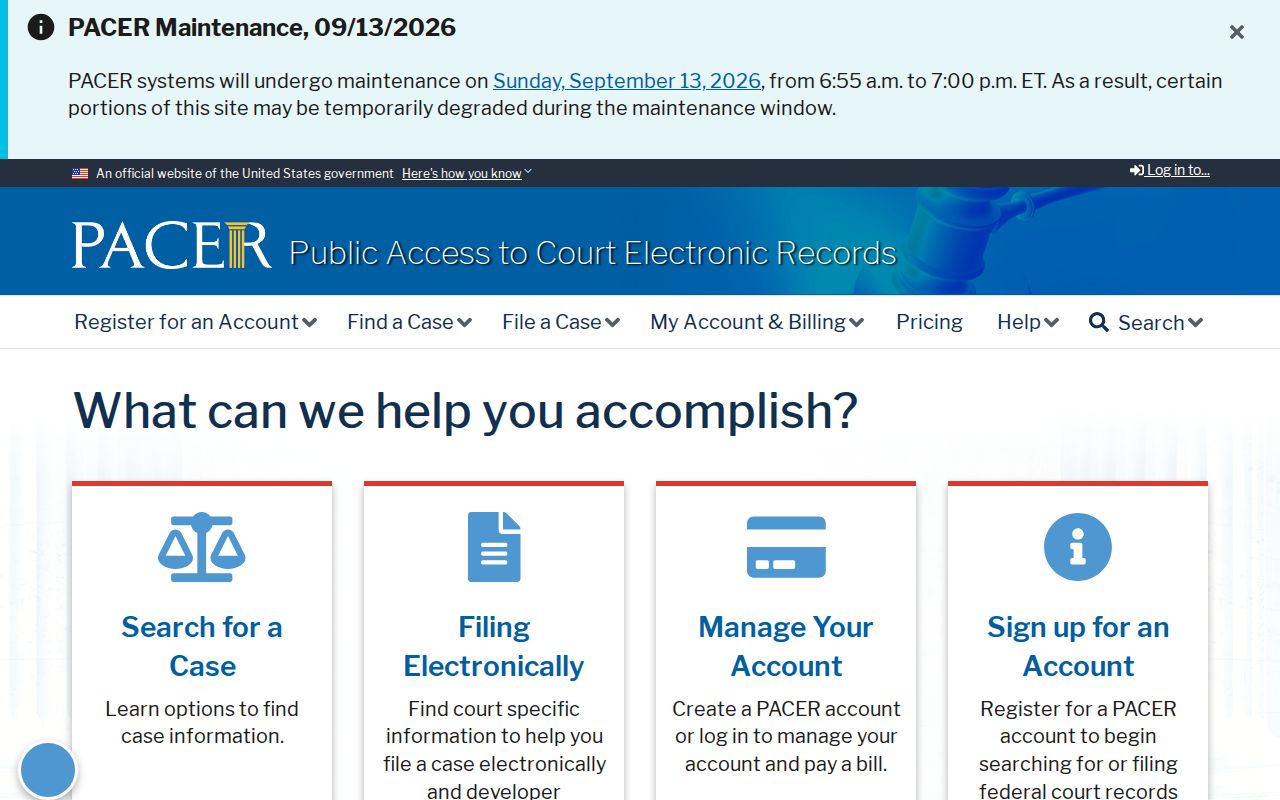
A federal docket search covers federal cases, not current Lee County warrant confirmation. After service comes booking. Officers arrange an initial appearance where the court takes up rights, the charge, and release conditions. The W.S. “Buck” Jones Detention Center is the county's sole operating detention facility. It houses people held on county, municipal, and federal matters. Custody there does not transfer an Auburn or Opelika case.
Unserved Lee County Arrest-Warrant Access
Lee County posts no online active-warrant search. Alabama offers no statewide public name-search portal either. The magistrate page states an arrest warrant is not public until served, and the sheriff's policy excludes unexecuted warrants. A docket can also omit a new, sealed, city-level, or agency-held order.
Quick answer: An absent online result is not proof that no Lee County arrest warrant exists; confirm through the correct official channel.
Suspect an unserved county warrant? The official direction is to appear in person at the Lee County Sheriff's Department. Call (334) 749-5651 first for routing. The sheriff's records policy governs a separate request for a releasable served or closed record. Routing differs by court. Auburn Municipal Court uses (334) 501-3180, Opelika Municipal Court uses (334) 705-5190, and county routing starts with the Circuit Clerk at (334) 737-3526.
Arrest Warrant vs Summons vs Bench Warrant
The title and origin of a Lee County document tell you what it commands. A probable-cause arrest warrant starts custody. A summons orders an appearance without arrest. A bench or alias warrant usually follows a missed act in an existing file. A search warrant authorizes a search of property instead.
| Process | Basis | Response |
|---|---|---|
| Arrest Warrant | Sworn facts and probable cause | Arrest or surrender, then initial appearance |
| Summons | Court directs a person to answer | Appear as instructed without initial arrest |
| Bench or Alias Warrant | FTA, contempt, or noncompliance | Issuing-court recall, compliance, or arrest |
The Lee County bench-warrant process gives added detail about missed settings and venue-specific recall.
Bond After a Lee County Arrest
No single Lee County bond schedule covers every warrant, and no countywide jail-window timetable or payment policy exists either. Alabama treats pre-conviction bail as a right outside the statutory exceptions, and its whole purpose is making sure the person shows up later. Still, a judicial officer sets the actual amount and any conditions in the real case, so numbers vary. Before you arrange a surrender, call the issuing court for the exact figure and the bond types it accepts. Auburn allows signature bonds, cash, a licensed bail company, or a qualifying property owner, and it applies stricter rules after a failure to appear or for someone from out of state. Those are city rules, though. Circuit Court, District Court, and Opelika make their own calls. Remember that bond addresses custody and appearance only; it never dismisses the allegation itself, and the case keeps moving afterward.
- Signature bond
- Release based on a signed promise to appear when permitted.
- Surety bond
- A licensed bail company guarantees appearance under court-approved terms.
- Property bond
- Qualifying property owners secure the obligation under local rules.
What to Do If There's a Warrant for You
Go straight to official contact instead of relying on an unofficial list. The Circuit Clerk routes a file and walks you through procedure, but the office cannot give legal advice. A lawyer can contact the court for you, ask it to recall the warrant where allowed, set up a scheduled surrender, and sort out bond. Lee County runs no universal walk-through surrender program and offers no clearing form.
- Identify the venue from the report, notice, citation, or case papers.
- Confirm status and ask whether counsel may arrange an appearance or surrender.
- Verify where to report, what photo ID to bring, and whether bond has been set.
- Use only a court-approved bond route and keep every receipt and setting notice.
- Attend the initial appearance and all later dates until the underlying case is resolved.
Important: Confirm intake and bond instructions before arriving; an old docket, payment receipt, or third-party listing cannot establish current warrant status.
Probable Cause in Lee County Warrants
Probable cause just means a reasonable factual basis to think an offense happened and that the named person took part. That is the threshold for an arrest warrant. It is not a trial standard. In Lee County, the affiant swears to the facts, so issuance rests on sworn statements rather than bare accusation. The magistrate page says the warrant-issuance process itself costs nothing, but court costs can still pile up in the later case. It also warns that charges do not get casually dropped after issuance. A complainant cannot simply order a dismissal, and posting bond never resolves the case; the court keeps authority through every later setting. Helping a relative? Keep the inquiry narrow. Staff may insist on the subject's own appearance, counsel, identification, or proof of authority before sharing protected facts. Never send Social Security numbers or sensitive records through ordinary email. Bring the full legal name, date of birth, a case or report number, the issuing city, and an approximate date, so the court can route the question without guessing. If the matter touches juvenile, youthful-offender, family, or grand-jury material, expect extra limits even when a related arrest has already happened.