
How to Check for a Warrant in Lee County
Lee County posts no public sheriff warrant list. That makes the venue on your citation, notice, or case paper the first thing to nail down. County traffic matters and offenses outside Auburn and Opelika generally route to Lee County District Court, while Auburn and Opelika municipal cases stay with their own city courts. Felony complaints may start with a city investigator or a deputy and then pass to a Lee County warrant magistrate. From there, the Lee County Circuit Clerk directory breaks out circuit criminal, district criminal and traffic, e-warrant, juvenile, child-support, and records contacts, so you reach the right desk in one call. Staff can route a case but cannot give legal advice. Keep a full legal name, date of birth, citation or case number, issuing place, and photo identification ready before you call.
- Read the paper and identify the issuing city, county, and court.
- Call the matching court clerk and ask which division holds the case.
- For a suspected county warrant, follow the magistrate instruction to confirm in person with the sheriff.
- For Auburn or Opelika matters, contact that municipal court before assuming the county holds it.
- Use a focused records request only for records eligible for release, then confirm current status with the issuing office.
Lee County Has No Public Warrant Portal
Lee County has no official public name-search form for active warrants. Alabama's statewide Warrant Portal serves agencies only, and ALEA reporting is an exchange among criminal justice offices. Neither works as a self-search. Just One Look and AlaCourt can locate some court cases, though neither is verified as a complete or current source on warrant status.
Key point: A blank web result does not prove that no Lee County warrant exists.
A recent, sealed, unexecuted, juvenile, or municipal warrant may not show up in any public court view. Only the issuing Lee County court or the sheriff can confirm it.
Types of Warrants in Lee County
The label tells you why the court acted. Lee County magistrates review sworn material for probable cause before issuing an arrest warrant. A bench or alias warrant usually follows a missed setting or an unmet court duty. A traffic warrant is a failure-to-appear process tied to an unresolved citation. Search warrants authorize a defined evidence search, not a public hunt for a person.
| Warrant Type | How It Arises | Who Issues It |
|---|---|---|
| Arrest warrant | Probable cause based on a sworn report or deposition | Judge or Lee County magistrate |
| Bench or alias warrant | Missed court, contempt, probation, or compliance failure | The judge responsible for the case |
| Traffic FTA warrant | Unresolved ticket followed by failure to appear | District or municipal court |
| Search warrant | Probable cause to search a stated place, person, or item | Authorized judicial officer |
Lee County Magistrate Warrant Route
The local magistrates and warrants page lays out the county path. A complainant first reports the event to the sheriff or the police agency with jurisdiction. For many out-of-city misdemeanors, the person supplies an incident report and a deposition. Felony reports go through an investigator instead. The affiant is then placed under oath, and a magistrate makes an independent probable-cause decision; a warrant issues only when that standard is met. The page also tells anyone who suspects an unserved warrant to appear at the sheriff's department for confirmation. That instruction matters, because the same page states an arrest warrant is not public until it has been served.
What a Lee County Warrant Record Shows
Official Alabama forms and Lee County procedure set out the usual contents of a warrant record, though no local public results table or warrant-number pattern exists. A file may show the court and county, the case or citation reference, the subject, an offense, the sworn basis, judicial authorization, the service return, and a bond decision. Access status may limit what can be seen.
| Case or warrant reference | An official identifier from the court; no public local format is confirmed, so keep the exact value shown, such as case number on notice. |
|---|---|
| Subject and offense | The named defendant and alleged charge or traffic or ordinance description. |
| Issuing court | The Circuit, District, Auburn Municipal, or Opelika Municipal Court that controls the matter. |
| Basis | Probable cause, failure to appear, or another court-order violation. |
| Service and bond | Return information and any release terms set by a judicial officer. |
| Access status | Public, restricted, sealed, juvenile, or unexecuted as the rule permits. |
Lee County Court Routing
The T.K. Davis Justice Center at 2311 Gateway Drive in Opelika houses the Circuit Clerk along with the Circuit and District Court routes, and its public hours are 8:30 a.m. to 4:30 p.m. The main clerk number is (334) 737-3526. County traffic, district criminal, felony, e-warrant, juvenile, and family matters do not all go to one counter, so ask before you queue. The Thirty-Seventh Judicial Circuit home is the starting point for court records. Auburn Municipal Court holds Auburn traffic, ordinance, adopted misdemeanor, FTA, and probation matters, and Opelika Municipal Court handles the equivalent Opelika jurisdiction. Always confirm which Lee County court issued the process before making a trip.
Who Issues and Serves Lee County Warrants
Several offices can issue process within their own authority: the Circuit Court of Alabama, Thirty-Seventh Judicial Circuit, Lee County District Court, warrant magistrates, and the Auburn and Opelika municipal courts. Courts decide probable cause, failure to appear, bond, recall, and the next setting. The Lee County Sheriff's Office, Auburn Police, Opelika Police, and other authorized officers serve the warrants. Keep in mind that the issuing office and the serving office are not always the same. A city warrant can land a person in the county detention center after arrest and booking, while the municipal court remains the place that can resolve the city case.
Lee County Sheriff's Office
1900 Frederick Road
Opelika, AL 36801
(334) 749-5651
Lee County In-Person Confirmation
The sheriff is the practical confirmation point for the county. The agency does not publish a standalone warrant desk number or a public active-warrant form, and its main office keeps weekday hours from 8 a.m. to 5 p.m. Call for routing before you travel, then follow the magistrate page's in-person instruction for a suspected unserved county warrant. Bring photo identification and enough case detail to distinguish the matter. Never email a Social Security number or other sensitive data. For a releasable served or closed record, public-record questions go to (334) 737-7107. Confirming a suspected warrant and requesting a copy are different tasks, so say which one you need. The sheriff contact page gives the official office route, but it does not expose warrant records online.
What to Do If You Have a Lee County Warrant
Start by confirming which court issued the warrant and what type of process it is. Then ask the clerk which path that Lee County court allows: a new setting, payment or a payment plan, a motion to recall or quash, a scheduled appearance, bond, or surrender. A recall means the issuing court withdraws the warrant. A quash order makes it void. Neither happens until the court confirms it. Talk to a lawyer before you appear if arrest is possible, since counsel can arrange a planned surrender and ask about the bond and next hearing. Auburn publishes cash, bail-company, and qualifying property-owner routes for some city cases, but Lee County posts no single universal bond schedule. Keep in mind that posting bond secures a future appearance; it does not dismiss the charge.
Important: Confirm court instructions before surrender, and obtain written or docket proof of any service, recall, or new setting.
After a traffic case, ask the Lee County court when ALEA will be updated about any license consequence. Keep each receipt and follow through on the underlying case.
Lee County Traffic FTA Path
A Lee County traffic ticket comes with a court date. Miss it without paying or otherwise resolving the case, and trouble stacks up fast. The District Court traffic page warns that an arrest warrant may issue, ALEA may suspend the license, the fine may rise, and a posted bond may be forfeited. The matter stays with the court even when a license notice follows. First figure out where the ticket lives: District Court, Auburn Municipal Court, or Opelika Municipal Court. Eligible county cases can use Online Traffic Resolution. A submitted request does not excuse appearance unless the court approves it. Paying may count as a guilty plea, and it may not recall an existing FTA warrant on its own.
Ticket or citation → court deadline → missed appearance → alias or FTA warrant → court-approved resolution.
Public Access to Lee County Warrant Records
Alabama residents generally hold a right to inspect public records under the Alabama Open Records Act, though statutory and safety limits apply. In Lee County, the local policy requires an in-person form, proof of Alabama residency, and a specific description of an existing record. The sheriff excludes unexecuted warrants, juvenile and youthful-offender records, open investigations, identifying information, and expunged material.
Key Rules:
Ala. Code §36-12-40 gives residents access subject to legal and public-safety exceptions.
Ala. Code §41-9-627 governs agency reporting of unserved warrants to ALEA, not a public portal.
Ala. Code §12-15-133 protects juvenile court and law-enforcement records.
The official Alabama Legislature code page shows the controlling text of the state's general records right for Lee County warrant access.
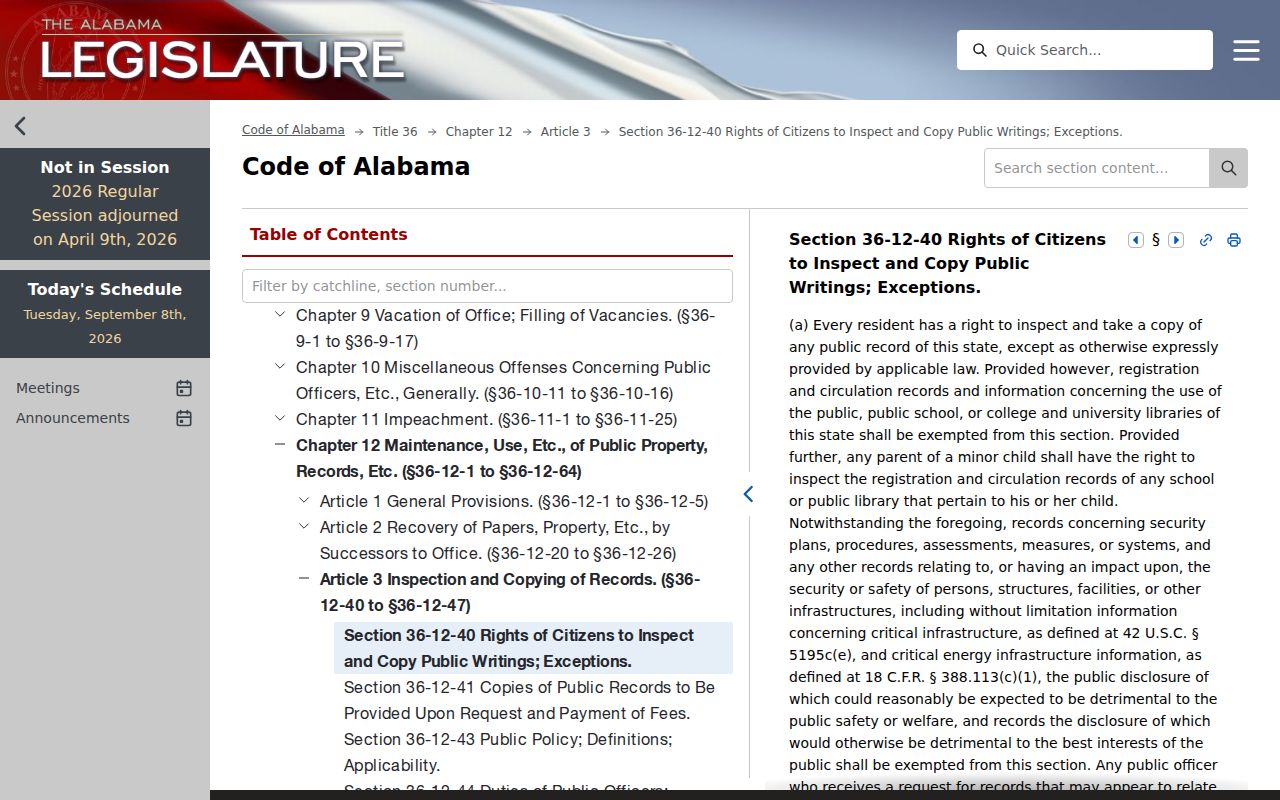
That state rule frames Lee County warrant access while preserving each listed exception. Court records also answer to Alabama court privacy rules. Access to a served case file never guarantees access to sealed, grand-jury, or active-investigation material.
Lee County Sheriff's Records Policy
Requests go in person to the Administration Division at 1900 Frederick Road. The requester must be permanently domiciled in Alabama and show proof, such as an Alabama driver license or voter registration. Be reasonably specific, because the office will not create a record or answer a broad question. The official Lee County records policy sets a normal response target of 15 business days and posts current copying, research, and digital-production charges. Those are records fees, not bonds, fines, or warrant-clearing costs. The same policy's exclusions explain why the Lee County sheriff cannot hand over a complete public list of unserved warrants.
Lee County Warrant Terms
Lee County pages and Alabama forms use several labels for related steps. The issuing court's wording controls, so ask staff to read the exact status rather than guessing from a general term.
- Arrest warrant
- A probable-cause order authorizing an arrest for an alleged offense.
- Bench warrant
- A judge's arrest process tied to a missed setting, contempt, or compliance failure.
- Alias warrant
- Alabama's later arrest warrant commonly used after failure to appear.
- Served
- The warrant has been executed and returned through the legal process.
- Recalled or quashed
- The issuing court has withdrawn or voided the warrant.
- Bond
- Release terms meant to assure return to court, not dismissal of the case.
Lee County Detention Is Not the Court
The W.S.
Jones Detention Center holds 424 beds and is the county's only operating detention facility. It houses people from Lee County municipalities and may hold federal detainees too. That shared custody role can make a city arrest look like a county court case when it is not. The official corrections page describes the facility and its municipal role.
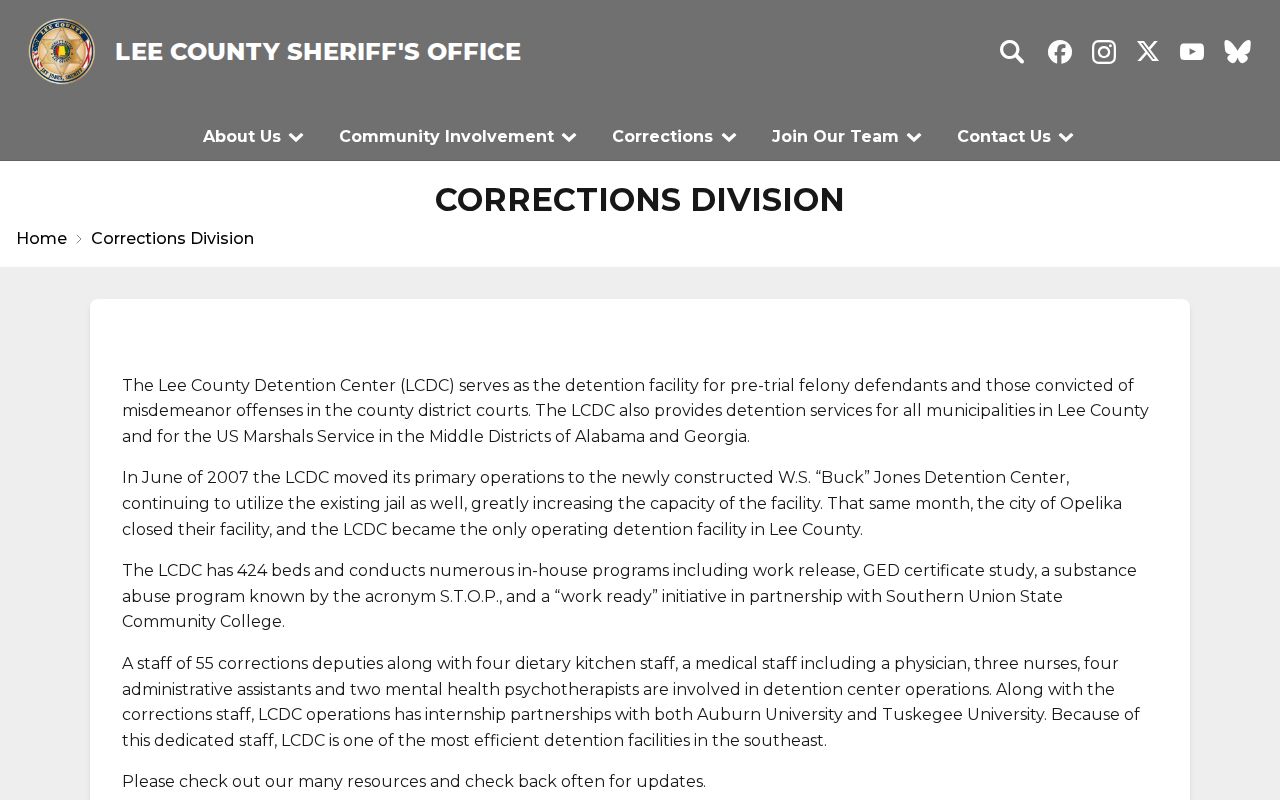
The Lee County jail can explain custody logistics. Only the issuing court controls recall, court dates, and the underlying charge.
Warrant Records by City in Lee County
Where a city warrant question goes depends on local court structure. Auburn and Opelika run municipal courts for their own traffic, ordinance, adopted misdemeanor, and FTA matters. Smiths Station, Loachapoka, and Waverly post no public city warrant portal, so residents there must identify the issuing agency and use the proper city or county office. The official Census incorporated-place table documents the five Lee County city profiles behind this routing.
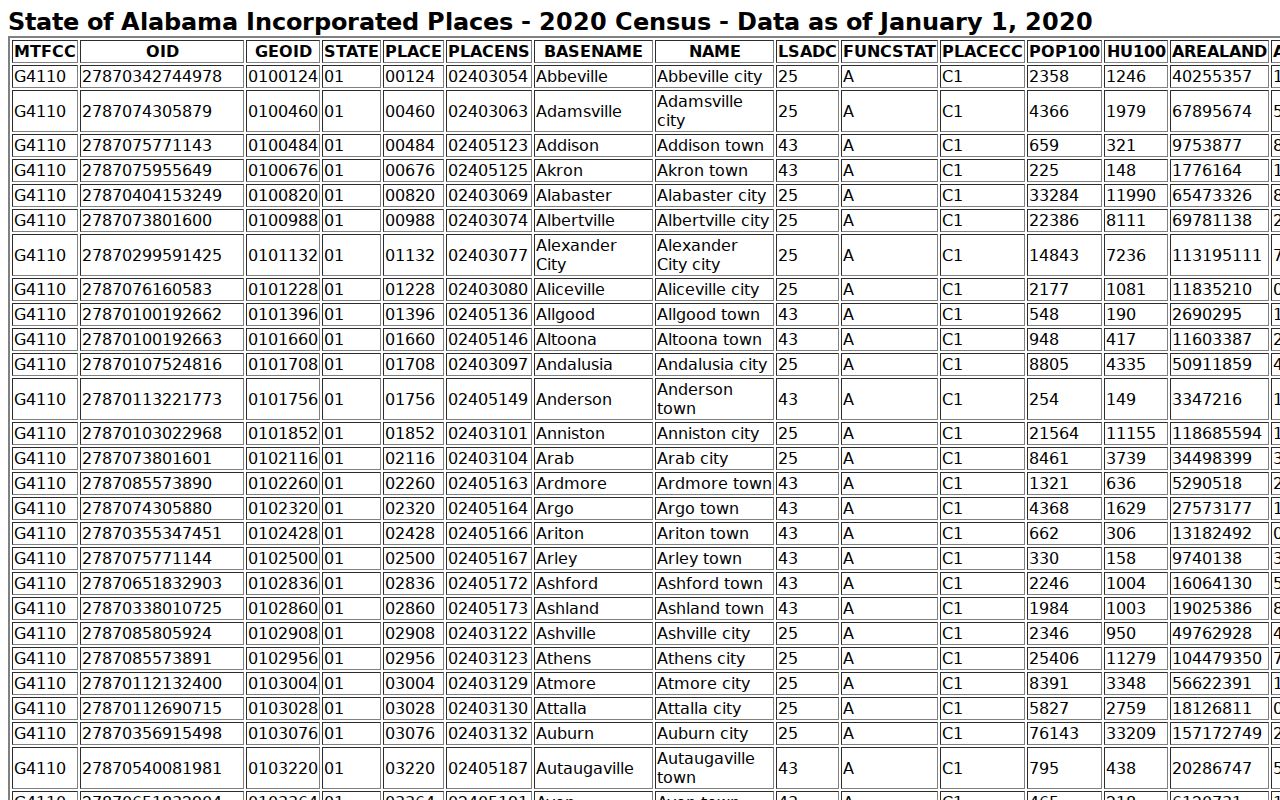
The Census table sets the Lee County city set and its population order. It says nothing about how many warrants any city has.
Auburn Warrant Records
Auburn Police and Auburn Municipal Court
Opelika Warrant Records
Opelika Police and Opelika Municipal Court
Smiths Station Warrant Records
City Clerk records and county court routing
Loachapoka Warrant Records
Citation-first county and court routing
Waverly Warrant Records
Town Hall contact and Lee or Chambers County check
Each city page puts the local office first. It then explains when a matter moves to the Lee County Circuit Clerk or the sheriff.