
How to Search Lee County Warrants
The Lee County Sheriff's Office posts no online warrant search form, so work the phone and the paperwork instead. Begin with whatever a ticket, notice, or case paper shows. County traffic, anything charged outside Auburn or Opelika, and many felony complaint matters usually run through Lee County District Court or a county magistrate. Auburn and Opelika each keep municipal traffic, ordinance, misdemeanor, and failure-to-appear cases in their own courts. Remember that a city warrant may never surface in a county court record. When you call, have a full legal name, date of birth, citation or case number, issuing city or county, and rough court date ready. Those details help a clerk find the right file fast. Never email a Social Security number or anything else that sensitive.
- Read the citation and identify the issuing venue.
- Use the Circuit Clerk directory to reach the right division.
- For a suspected unserved county warrant, follow the magistrate instruction to appear at the sheriff's department.
- Contact Auburn or Opelika Municipal Court directly for a city case.
- Use court access or a lawful records request as support, then confirm with the issuing office.
Lee County No-Portal Walkthrough
Missing search box, present warrants. Lee County issues plenty of both bench and arrest warrants; it just offers no online lookup for them. The routing decides where you go. The Lee County Sheriff's Office sits at 1900 Frederick Road in Opelika, reachable at (334) 749-5651, with general hours of 8 a.m. to 5 p.m. Monday through Friday. Its magistrate page tells anyone who suspects a warrant to come in person. A call first can confirm current arrival and safety instructions, though the site does not promise warrant confirmation over the phone. The official sheriff contact panel shows the right county agency and nothing more. View the source on the sheriff website.
That sheriff page backs up the contact route only. It offers no Lee County warrant lookup of its own.
Note: The sheriff app is a general agency resource and carries no warrant-search feature.
Lee County Warrant Search Fields
Lee County publishes no public warrant search form. There are no filters or result controls to describe. The useful "fields" are simply the facts an official needs to find a case and tell similar names apart.
| Information | Type | Use | Notes |
|---|---|---|---|
| Full legal name | Identity | Core lookup fact | Give the spelling used on court papers. |
| Date of birth | Date | Narrows a match | Use an approved channel. |
| Case or citation number | Reference | Routes the file | Copy it exactly. |
| Issuing venue | Court or city | Finds the custodian | Separate county, Auburn, and Opelika matters. |
| Photo ID | Document | Supports a visit | Residency proof is also needed for sheriff record requests. |
Treat these as preparation items, not fields from any public Lee County warrant database. An office may limit what it confirms or releases.
Lee County Clerk Routing
The T.K. Davis Justice Center at 2311 Gateway Drive, Opelika, houses the Lee County Circuit Clerk and the county court functions. Public hours run 8:30 a.m. to 4:30 p.m. The directory splits its work into circuit criminal, district criminal and traffic, e-warrants, juvenile or over-the-counter warrant matters, child support, and records requests. Ask for the division tied to the case.
Lee County Circuit Clerk
T.K. Davis Justice Center
2311 Gateway Drive
Opelika, AL 36801
(334) 737-3526
A clerk can route records and procedural questions. Legal advice is off the table. For a city ordinance or municipal ticket, contact that municipal court rather than assuming the county clerk holds it.
What a Lee County Warrant Search Returns
Lee County offers no public result screen. But official forms and local procedures show what a warrant-related court file may hold: the issuing court, the case reference, the kind of warrant, the alleged offense or missed-court trigger, and service status. Bond terms should never be guessed from a records fee.
| Case reference | An official identifier, such as the number on court papers; no public local pattern was verified. |
|---|---|
| Warrant type | Arrest, bench, alias failure-to-appear, probation, or another process. |
| Issuing court | The county, district, circuit, or municipal venue controlling the record. |
| Basis | A sworn probable-cause claim or a missed appearance. |
| Service and bond | Whether service occurred and any releasable court-set condition. |
"Recalled" or "quashed" means the Lee County court withdrew or nullified the warrant, while "served" means law enforcement executed it. Neither term alone closes the underlying case.
Blank Lee County Results Mislead
Alabama's Just One Look and AlaCourt services are court-case research tools, not complete warrant databases. A blank docket search can miss a new warrant, a city matter, a sealed file, an unexecuted arrest warrant, or anything kept apart from the public case view. ALEA receives unserved-warrant data from justice agencies under state law, but that exchange is not a public name-search service, even for Lee County cases.
- Unexecuted
- Issued but not served. The sheriff policy excludes it from public release.
- Served
- Law enforcement completed the arrest or service step.
- Recalled or quashed
- The issuing court withdrew or nullified the warrant.
- FTA or alias warrant
- Arrest process based on failure to appear after prior court process.
A blank screen only means that one source showed no match. It is not proof of clean Lee County warrant status.
Where Lee County Warrants Are Checked
Different custodians hold different Lee County records. County felony complaints and out-of-city misdemeanors can route through county magistrates. Auburn Municipal Court takes Auburn traffic, ordinance, adopted misdemeanor, citizen-warrant, and failure-to-appear work. Opelika Municipal Court covers city tickets, warrants, probation, ordinances, and misdemeanors. The Opelika FAQ puts it plainly: police cannot confirm by phone whether a person is wanted. The person must appear at the department or call Municipal Court for more information.
The route is: issuing court first → sheriff in person for a suspected county warrant → records request for a releasable served or closed record → attorney for advice on surrender, bond, recall, or quashing. ALEA handles some traffic license consequences, not public warrant checks.
Lee County Records Requests
A records request and a status check are two different errands. Lee County sheriff policy requires an Alabama resident to submit the Public Records Request Form in person at 1900 Frederick Road with proof of residency. The record must be described with reasonable detail. The office need not create a record or answer a broad question. The normal response target is 15 business days, with notice if more time is needed. Read the official open-records policy for access rules and current fees.
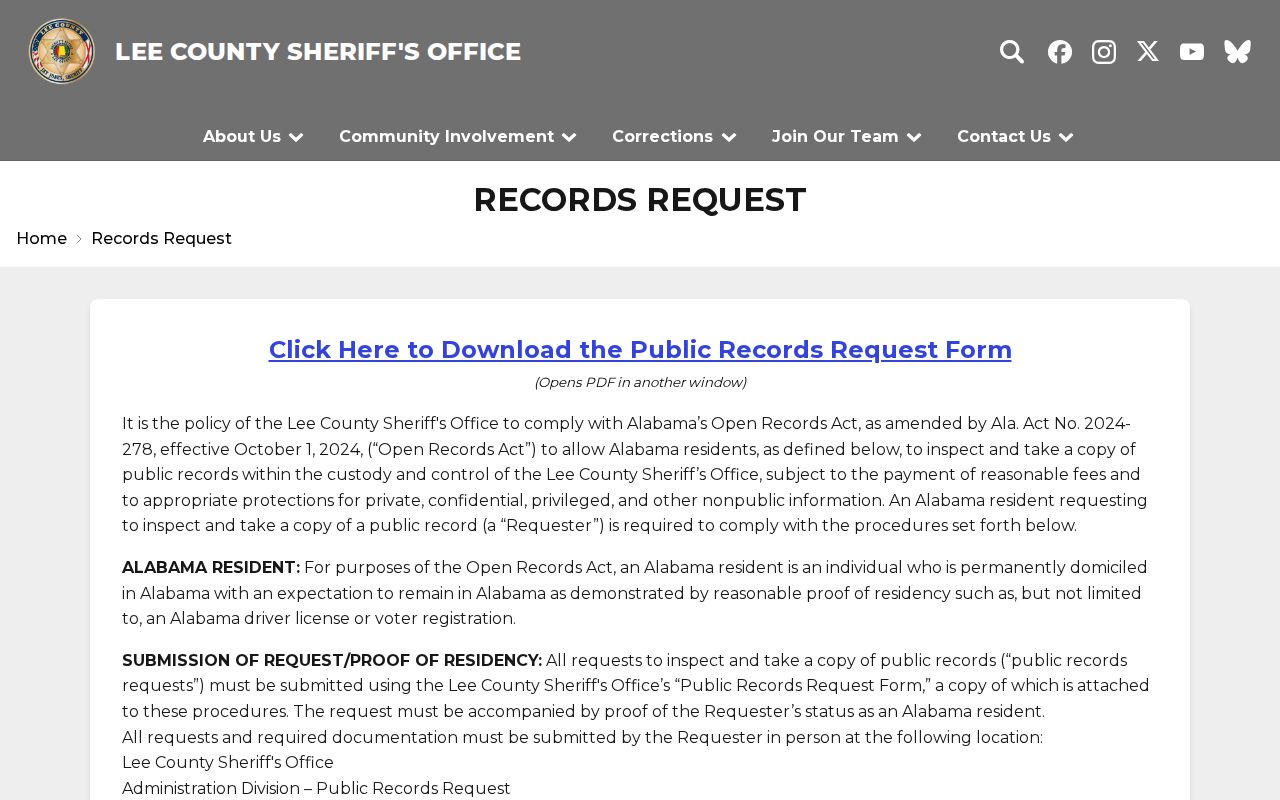
A copy request is not the same as an immediate warrant confirmation. For Lee County records, call (334) 737-7107. Copies cost $1 for the first letter-size page and 50 cents for each added page, with a $25 research fee once work is estimated beyond one hour. Those are copy charges, not warrant fines or bond.
Lee County Custody Is Separate
The Lee County Detention Center is the county's only operating jail, and it houses people for municipalities across Lee County. That split trips people up. Someone arrested on an Auburn or Opelika municipal warrant may sit in the county facility while the city court stays the issuing venue and controls the case. Where a person is held never changes which clerk keeps the file. The official corrections page describes that role but offers no warrant search. So a jail inquiry cannot replace contact with the issuing court. If surrender may be required, call the court first and seek legal advice. Ask where to report. Ask whether counsel can arrange a walk-through, what ID to bring, and when bond will be addressed.
Lee County Restricted Warrant Access
The Alabama Open Records Act gives residents access to public records. State law still allows exceptions. Lee County shields unexecuted arrest warrants, juvenile and youthful-offender records, grand-jury material, criminal-history data, expunged files, open-case material, and investigative records.
Key Rules:
An unserved arrest warrant is not an ordinary public copy under the sheriff policy.
Juvenile records are generally confidential unless access is authorized.
A missing online result is not proof that no Lee County warrant exists.
Ask what the Lee County clerk can confirm and release. For your own warrant, counsel can contact the issuing court and explain the proper appearance, bond, recall, or surrender route.